








News
-

Industrial Alumina Ceramics: A Procurement Guide
2025-11-21A useful alumina enquiry explains what the part must do and how acceptance will be judged. Starting with only a material name and a photograph leaves the supplier to guess which dimensions, surfaces and operating conditions matter. Start with the function and the problem Describe whether the component insulates, locates, supports or contacts a moving part. For a replacement, record the failure location and operating history. For a ne...
-
Custom Zirconia Rod Sizes: What to Put on the Drawing
2025-11-14There is no single useful list of custom zirconia rod sizes without a drawing and an application. The required diameter and length define the envelope; the mating parts and operating function determine which additional dimensions must be controlled. Distinguish dimensional and geometric requirements Diameter tolerance controls size. Straightness describes the form of the rod or its axis, depending on the drawing callout. Roundness, r...
-
Cordierite Ceramics for Industrial Heaters: Selection Questions
2025-11-07In a heater assembly, a ceramic component may position the element, separate conductors or provide a mounting interface. Name that function first. Calling a part “heating ceramic” does not establish whether it produces heat or supports a separate heat source. Why cordierite is considered Cordierite is known for low thermal expansion, as described in Kyocera’s cordierite material overview. That characteristic is relevant to thermal de...
-
Specifying Ceramic Parts for Semiconductor Equipment
2025-10-30“Semiconductor ceramic” often means a ceramic part used in semiconductor manufacturing equipment. It does not necessarily mean that the ceramic is itself a semiconductor. Start an enquiry with the component’s location and its mechanical, electrical or process-facing role. Map the installation position State whether the part is inside a process chamber, at an interface or in an external support assembly. Describe exposure to heat, vac...
-
High-Purity vs Standard Alumina: How to Compare Grades
2025-10-22“High-purity” and “standard” alumina are broad descriptions, not universal grade specifications. A useful comparison identifies the actual candidate materials and checks the properties relevant to the component. What the percentage does and does not tell you Alumina content describes composition, but it does not by itself define every electrical, thermal or mechanical property. Morgan lists several distinct materials within its 90–98...
-
Tubular Piezoelectric Ceramics: Vibration and Displacement
2025-10-13A piezoelectric tube can be designed for different motions. To describe its behaviour, consider the polarization direction, electrode arrangement and applied field together. The outside shape alone does not tell you which displacement will be useful in an assembly. Relate the electrodes to the required motion For radially polarized tube actuators, electrode arrangements can produce axial, radial or bending motion. Segmented outer ele...
-
Alumina Ceramic Applications: Match the Function to the Specification
2025-10-13Alumina is used in engineering components for several different reasons. A material overview can identify possible uses, but the component specification must say which function matters in the actual assembly. Electrical separation For an insulator, describe the conductor layout, operating conditions and required electrical test. Include the contact surfaces and the surrounding environment. A material property measured under one condi...
-
Electronic Ceramics: Insulators and Functional Materials
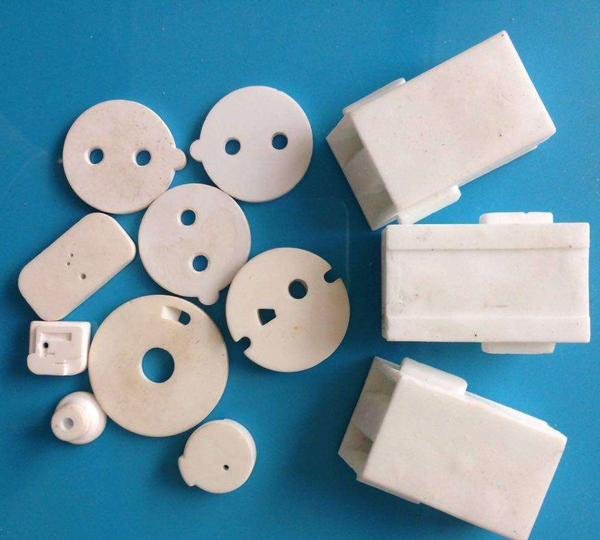
2025-10-13Electronic ceramics are a broad group. Some separate electrical conductors, while others provide a deliberately engineered response to an electric field or another operating condition. The word “ceramic” alone does not define the electrical behaviour. Insulating ceramics An insulating component is selected to limit unwanted current under specified conditions. Geometry and environment remain part of the design. Kyocera’s electrical...
-
Zirconia Ceramic Sintering Problems: A Review Checklist
2025-10-10Cracking, distortion and dimensional variation in a zirconia component require evidence before a process change. The visible defect is the starting point for investigation, not proof of one cause. Record the defect and when it appeared Identify the batch, part position and inspection stage. Note whether the issue was present after forming, after firing, after finishing or only after assembly. Photograph the defect with its location m...
-
Ceramic Fiber Materials in Refractory Installations
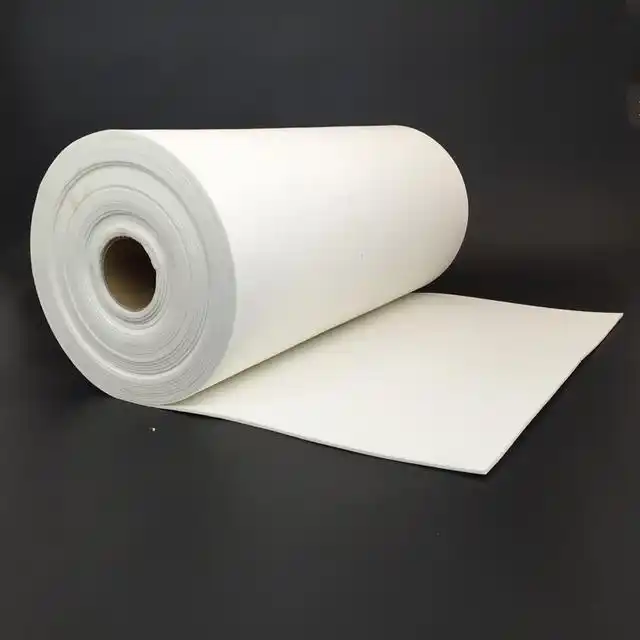
2025-05-15Ceramic fiber materials can be considered in refractory insulation layouts where the required form and installation conditions are clearly defined. Selection should start with the role of the insulation: exposed lining, backup insulation, a joint or a shaped interface. Select the form around the installation Flexible insulation and a rigid shaped part serve different assembly needs. A shaped component requires a profile drawing, sup...